

National Sandwich Day: A brief history of the sandwich
 Author
Damien Wilde
Author
Damien WildePosted On 3rd November 2016
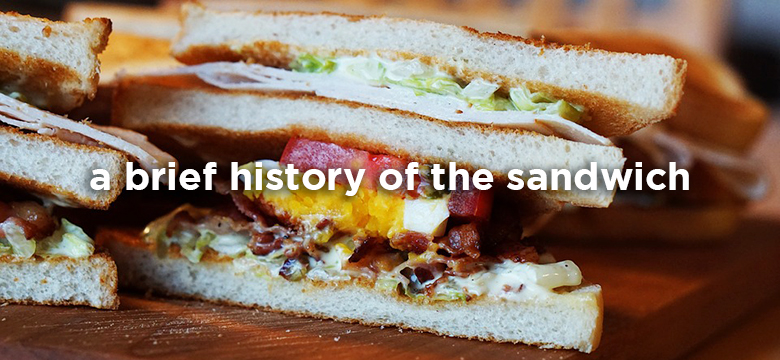
The origin of the sandwich is as obvious as the name itself, or so many of us think…the history of the sandwich is not as simple as it might seem…
First appearing in written English in the journal of Edward Gibbon – an 18th century MP – one of the world’s most popular lunchtime meals takes it’s name from John Montagu, the 4th Earl of Sandwich. Where it was said he ordered his valet to bring him meat tucked between two pieces of bread, whilst playing cards.
Other players would order “the same as Sandwich!”. But Montagu can’t be the owner of the simple combination of bread and filling.
Sandwiches have existed as long as we have been able to make bread, during the 1st Century B.C. Jewish Rabbi Hillel the Elder was reported to have created the tradition of putting lamb, mixed nuts and herbs between tow pieces of unleavened bread.
Beating Mr Montagu by some 1700 years…it’s not looking good for the Earl’s claim at this point.
The first recorded mention of the word sandwich – without the bread context – was around 664 AD but this was incredibly likely to have been some kind of Roman settlement based near the the Richborough Roman Fort (Rutupiae).
Coincidentally the name of the town of Sandwich is Saxon in origin, meaning ‘sandy place’ or ‘place in the sand’.
During the Middle Ages, people would used thick slices of stale bread called ‘trenchers’ to double up as a plate, of course they placed cooked meats and vegetables on them in some kind of ‘open sandwich’ fashion. It’s likely that they didn’t eat the stale bread though, with the rich tending to feed the food-soaked trencher to a dog or to beggars.
In the Netherlands, the Dutch have a long tradition of serving bread and butter with meat or fish alongside other fillings and toppings.
After the initial perception that the sandwich was the food of men who played cards and would drink at night, the dish began slowly appearing in more polite society as a late-night meal among the aristocracy.
In Spain and the England, the sandwich exploded during the 19th century. The working class realised that it was a fast, portable and inexpensive meal during the industrial periods.
By the early 20th Century, the sandwich had spread as far as the United States, with bread becoming a staple of the American diet.
Throughout the 20th and 21st Century, we have had a wave of sandwich innovators and as we all know, to sandwich is a commonly used verb!
Sandwich facts
In the United States, a Boston court ruled that to be considered a ‘sandwich’ by law, it must include at least two slices of bread. A case was brought to court after a restaurant selling burritos moved into a shopping centre where another had a no-complete clause within it’s lease. This prevented other sandwich shops from opening.
In Spain, a sandwich is made with ‘sandwich bread’ (sliced bread). A traditional Spanish sandwich is made with a roll or baguette style loaf and unsliced, known as a bocadillo.
Slang for sandwiches includes “butty”, “sanger”, “piece”, “sarnie”, “sammich”, “sando” and many many more!