

Commercial Blast Chiller Buying Guide: How to Choose the Right Machine
 Author
Jacob Harrison
Posted On 19th October 2026
Commercial Blast Chiller Buying Guide: How to Choose the Right Machine
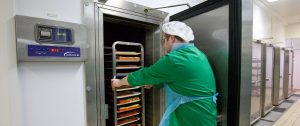
This commercial blast chiller buying guide covers the main things to consider when choosing a machine for your kitchen, including chilling capacity, tray sizes, temperature controls and installation requirements.
Whether you’re preparing food in advance, cooling cooked ingredients or managing larger batches, the right blast chiller needs to suit the amount of food you produce and the way your kitchen operates.
1. What is a commercial blast chiller?
A commercial blast chiller cools hot food quickly and in a controlled way. It removes heat much faster than a standard fridge. This helps kitchens cool cooked food safely before moving it into refrigerated storage.
This is particularly useful in restaurants, hotels and production kitchens where food is prepared ahead of service or cooked in batches.
A storage fridge is designed to maintain chilled food at a suitable temperature. A blast chiller is built to bring the temperature of recently cooked food down quickly.
Many commercial blast chillers are rated to cool a specified load to around +3°C within 90 minutes. Actual performance depends on the machine, the amount of food and how it’s loaded.
Rapid chilling supports food temperature control, but doesn’t replace safe handling. Your kitchen still needs to follow its procedures for cooling, checking temperatures and storing food correctly.
2. Blast chiller vs blast freezer: what’s the difference?
Blast chilling and blast freezing both reduce food temperatures quickly, but serve different purposes.
A blast chiller cools cooked food to a chilled temperature, typically around +3°C. A blast freezer goes further, reducing the food’s temperature to approximately -18°C for frozen storage.
These temperatures refer to the food itself, not simply the air inside the machine.
| Function | Typical food temperature target | Purpose |
|---|---|---|
| Blast chilling | Around +3°C | Rapid cooling before chilled storage |
| Blast freezing | Around -18°C | Rapid freezing before frozen storage |
The right choice depends on whether you’re preparing food for chilled storage or producing batches that need to be frozen.
Dedicated blast chillers
If your kitchen mainly prepares food in advance for chilled storage, a dedicated blast chiller may be all you need.
Many models are rated to reduce a specified load of cooked food from around +90°C to +3°C within 90 minutes. Actual cooling times depend on the machine, food quantity and loading arrangement.
These machines suit restaurants, cafés and catering kitchens preparing cooked ingredients or dishes ahead of service.
Browse our Blast Chillers Only range if rapid chilling is your main requirement.
Combined blast chiller/freezers
A combination machine can blast chill food to around +3°C or blast freeze it to approximately -18°C.
Many commercial blast freezers are rated to blast freeze a specified load from around +90°C to -18°C within 240 minutes. However, performance figures and test conditions vary between manufacturers.
This flexibility is useful for kitchens producing chilled meals and frozen batches, especially where space for separate machines is limited.
Don’t assume a combination machine can chill and freeze the same weight in one cycle. Manufacturers often specify different maximum loads for each function.
If you need both options, compare our Blast Chiller Freezer Combination range.
Whichever type you choose, check the manufacturer’s stated performance against your food safety procedures and production needs.
3. What size commercial blast chiller do you need?
Choosing the right size isn’t just about how many trays fit inside. Consider how much food you’re cooling, how it’s arranged and how quickly you need it chilled.
A machine suitable for occasional batches may struggle with large quantities ahead of a busy service.
Kilograms per cycle
Manufacturers usually specify chilling capacity in kilograms per cycle. This is the weight of food a machine is rated to cool under particular test conditions.
A blast chiller rated for 20kg per cycle won’t necessarily handle every 20kg load in the same way. For example, thick portions of food may take longer to cool than shallow trays. Starting temperature and loading arrangement also affect performance.
For combined blast chiller/freezers, check both capacity ratings. Freezing capacity is often lower than chilling capacity.
Tray sizes and GN compatibility
Check how many trays the machine accommodates and which sizes it accepts.
Many blast chillers use gastronorm (GN) containers, although some models also accommodate bakery trays or other formats.
Five tray positions won’t necessarily accommodate five deep containers filled to the top. Tray spacing, food depth and airflow affect chilling performance.
Compare the manufacturer’s tray dimensions and loading guidance with the containers you already use.
Planning for peak demand
Plan around your busiest food preparation periods, not just your total daily production.
A restaurant preparing several dishes in advance may need to chill multiple batches within a short period. A production kitchen may need greater capacity to avoid delays.
Consider how much food needs chilling at once, how many cycles you can complete and whether staff have time to load and unload the machine.
Too little capacity can create a bottleneck, while an unnecessarily large machine may increase purchase and running costs.
Choose a blast chiller that handles normal production comfortably, with flexibility for busier periods.
4. Blast chiller features worth considering
Two blast chillers with similar capacities can offer different features. Some have straightforward controls, while others provide more flexibility over cycle management and monitoring.
The right features depend on what you’re preparing, how often you use the machine and your food temperature checking procedures.
Core temperature probes and controls
A core temperature probe measures the temperature inside the food rather than the air inside the cabinet.
On compatible machines, it can control the chilling cycle, allowing the machine to respond when the food reaches its target temperature.
This is useful when chilling different foods, as a large joint of meat may take longer to cool than a shallow tray of cooked vegetables.
Staff must position the probe correctly to get a reliable reading. They must also follow the manufacturer’s instructions and the kitchen’s food safety procedures.
Check whether a core probe is included, optional or unavailable.
Timed cycles and automatic holding modes
Some blast chillers offer timed programmes, allowing staff to select a cycle based on the food being prepared.
Others provide automatic programmes, temperature alarms or cycle monitoring features to help track the chilling process.
Certain machines switch to a chilled holding mode when the cycle finishes, helping maintain a suitable temperature until the food is removed.
A holding function shouldn’t automatically be treated as a replacement for dedicated refrigerated storage. Check the manufacturer’s guidance.
Advanced controls can help in busy kitchens, but a simpler machine may be suitable if it meets your performance and monitoring requirements.
5. Commercial blast chiller installation requirements
A machine with the right capacity and features may still be unsuitable if its installation requirements haven’t been checked.
Before ordering, confirm that it suits your electrical supply, available space and kitchen layout.
Electrical supply
Electrical requirements vary by machine size and design.
Some compact models operate from a standard 13A supply, while larger machines may need a dedicated connection or three-phase power.
Similar tray capacities don’t necessarily mean identical electrical requirements. Check the exact specification and have a qualified electrician confirm your supply is suitable.
Space, ventilation and access
Measure the installation space, allowing for ventilation, door opening and staff access.
Air-cooled machines need adequate airflow around their refrigeration system. Restricted ventilation can affect performance and increase energy consumption.
Follow the manufacturer’s clearance requirements rather than positioning the machine tightly against surrounding equipment.
Allow enough room to load and unload trays safely, especially when transferring hot food from cooking equipment.
Check the delivery route too. Doorways, corridors and tight corners can cause problems even when the machine fits its intended position.
Drainage and installation checks
Some blast chillers require drainage or provision for removing condensate and defrost water. Arrangements vary by model.
Check whether a permanent drain is needed and whether your plumbing can accommodate it.
Consider the surrounding temperature too. Positioning a blast chiller near high-heat cooking equipment or in a poorly ventilated area may affect performance.
Before ordering, check the machine’s dimensions, power supply, ventilation space, drainage needs and recommended operating conditions.
These checks help avoid unexpected installation costs.
6. Running costs, cleaning and maintenance
Purchase price is only part of the cost of owning a commercial blast chiller. Energy consumption, cleaning and servicing also matter.
Running costs and energy use
Running costs depend on more than machine size.
Usage frequency, food quantity, starting temperature and surrounding kitchen conditions all affect energy consumption.
A larger machine isn’t automatically cheaper to run just because it handles more food per cycle. However, a smaller machine may need several cycles to process the same quantity.
Compare manufacturer energy figures where available and consider how each model fits your production schedule.
Cleaning and routine maintenance
Regular cleaning supports hygiene and helps the machine operate as intended.
Clean food-contact surfaces, shelves, tray supports and door seals according to the manufacturer’s instructions. Keep ventilation openings clear and check for worn or damaged seals.
Some machines offer automatic defrost functions or removable components that make cleaning easier.
Check the recommended maintenance, warranty coverage and availability of servicing and replacement parts.
A machine that’s easy to clean and maintain can offer better long-term value than one chosen on purchase price alone.
7. Commercial blast chiller buying checklist
Before choosing a commercial blast chiller, make sure you can answer these questions:
- Do you need chilling, freezing or both? Choose between a dedicated blast chiller and a combination machine.
- How much food needs cooling at once? Compare kilograms-per-cycle ratings with peak demand.
- Will your trays and containers fit? Check GN compatibility, dimensions, spacing and usable capacity.
- Can the machine meet your cooling requirements? Check rated performance against your food safety procedures.
- Which controls do you need? Consider probes, timed programmes, alarms and monitoring.
- Is the electrical supply suitable? Check the exact model’s power requirements.
- Is there enough space? Allow for ventilation, doors, loading and delivery access.
- Does the machine need drainage? Check how condensate and defrost water are managed.
- What will it cost to maintain? Consider energy use, cleaning, servicing, warranty and parts.
If you’re unsure, check the manufacturer’s specifications or speak to your supplier before ordering.
8. Commercial blast chiller FAQs
Do all commercial kitchens need a blast chiller?
Not necessarily. There isn’t a blanket UK legal requirement for every commercial kitchen to have a blast chiller.
However, food businesses must cool and store food safely. If your kitchen regularly prepares large quantities of cooked food for later use, a blast chiller can make it easier to manage cooling times and temperatures.
The right approach depends on your food preparation methods, the quantities involved and your food safety procedures.
How quickly does a blast chiller cool food?
Many commercial blast chillers are rated to reduce a specified load of cooked food from around +90°C to +3°C within 90 minutes.
However, this is a common manufacturer performance rating, not a guaranteed cooling time for every load. The type of food, its thickness, starting temperature and how the machine is loaded can all affect the result.
Always check the manufacturer’s stated performance and follow your kitchen’s food safety procedures.
Can you use a blast chiller as a normal fridge?
Some blast chillers have a holding mode that maintains food at a chilled temperature once the cooling cycle has finished.
However, this doesn’t automatically mean the machine is suitable for everyday refrigerated storage. Holding functions and their intended use vary between models.
If you need to store food for longer periods, check the manufacturer’s instructions and plan for suitable refrigerated storage where required.
Quick summary: choosing the right commercial blast chiller
This commercial blast chiller buying guide covers the key things to consider, from cooling capacity and freezing options to installation and running costs. The best machine is one that suits your kitchen’s production needs.
| What to consider | What to look for |
|---|---|
| Machine type | Dedicated blast chiller or combined blast chiller/freezer |
| Chilling capacity | Kilograms per cycle and peak production |
| Tray compatibility | Tray numbers, GN sizes, spacing and food depth |
| Temperature controls | Core probes, timed programmes and monitoring |
| Installation | Electrical supply, ventilation, space and drainage |
| Ongoing costs | Energy consumption, cleaning, servicing and warranty |
Compare the full specification against your production requirements rather than choosing on tray capacity or purchase price alone.
Browse our range of commercial blast chillers
At CS Catering, we offer commercial blast chilling equipment for different kitchen sizes and production needs.
Explore our commercial blast chillers to compare available models, capacities and features.
If you’re unsure which machine is suitable, contact our team for help choosing equipment that meets your requirements.