

Commercial Fryer Buying Guide | CS Catering
 Author
Jacob Harrison
Posted On 17th November 2026
< !DOCTYPE html>
Commercial Fryer Buying Guide: How to Choose the Right Fryer
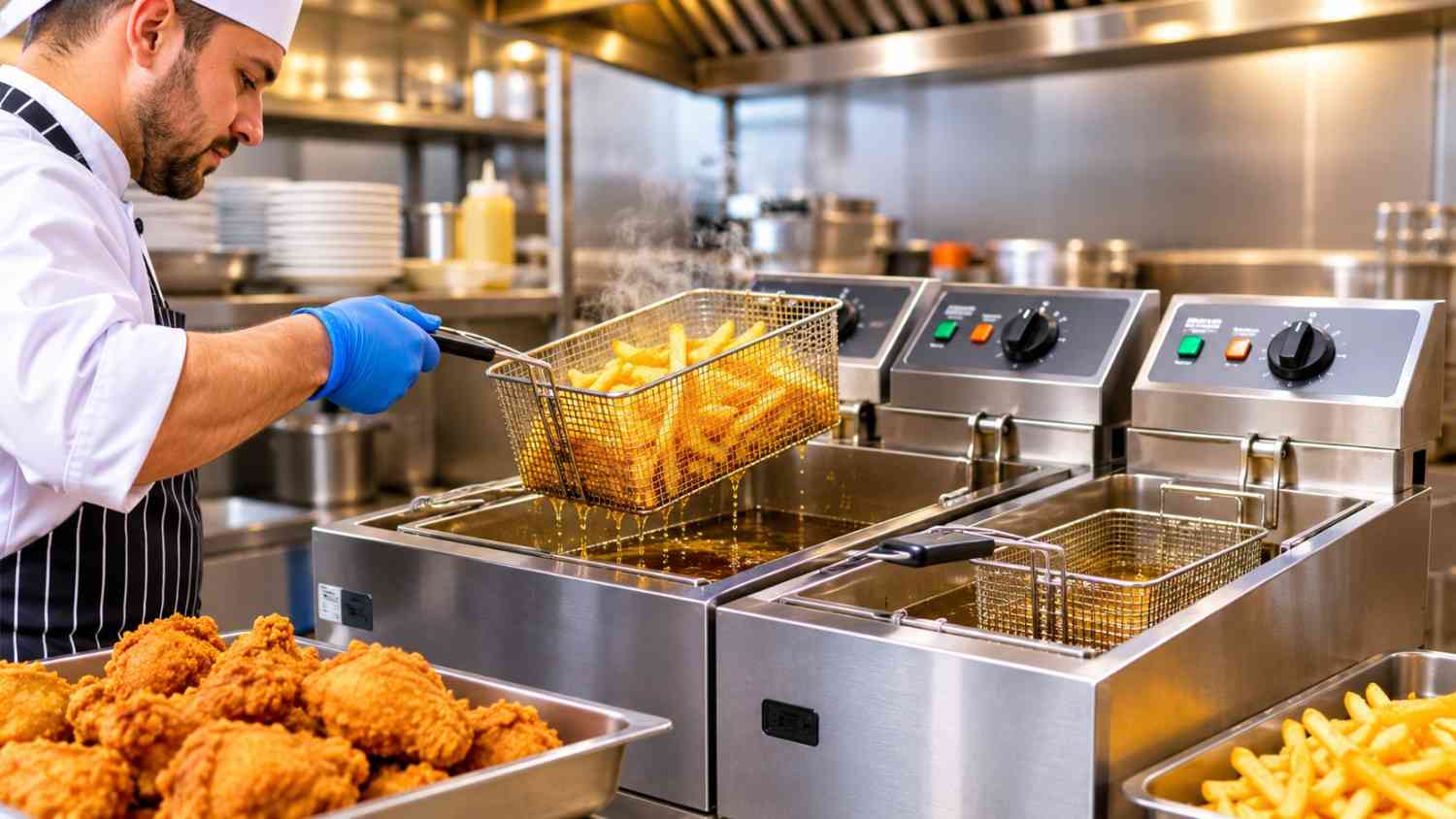
This commercial fryer buying guide will help you choose equipment that suits your menu, kitchen space and busiest service periods. The type of fryer, its cooking performance and the demands of your menu all affect how well it will cope during a busy service.
Whether you’re frying chips, fish, chicken or other menu items, it’s important to consider how much food you need to prepare, how often you’ll cook in batches and the space available in your kitchen. You’ll also need to decide between gas and electric models, different tank configurations and features such as oil filtration.
This guide explains the main options and what to check before purchasing, helping you choose equipment that suits your kitchen and day-to-day operation.
1. What Is a Commercial Fryer?
A commercial fryer is a piece of professional catering equipment designed to cook food by immersing it in hot oil. Commercial deep-fat fryers are widely used in restaurants, pubs, takeaways and fish and chip shops to prepare foods such as chips, battered fish, chicken and other fried menu items.
Unlike domestic fryers, commercial models are designed for the demands of a working kitchen. They are available in different sizes and configurations, with features such as adjustable temperature controls, multiple baskets and separate oil tanks on certain models.
The right fryer depends on what you’re cooking, how many portions you need to prepare and how often you’ll use it. Understanding the available types is a useful starting point before comparing capacity, fuel options and additional features.
2. Types of Commercial Fryers
In this commercial fryer buying guide, the first choice is often between countertop and freestanding designs. Both can be suitable for professional kitchens, but the best choice depends on your available space, menu and the amount of frying you need to do.
Countertop Commercial Fryers
Countertop fryers sit on a suitable work surface, making them useful for kitchens with limited floor space or businesses that only need occasional or supplementary frying capacity.
They are available with single or twin tanks and in a range of oil capacities. Smaller models may suit cafés, pubs and kitchens preparing modest quantities of fried food. Larger countertop units can also support more demanding service, provided their output meets your needs.
Before choosing a countertop model, check its dimensions, weight, electrical or gas requirements and the suitability of the work surface.
Explore our Counter Top Fryers to compare the available options.
Freestanding Commercial Fryers
Freestanding fryers are floor-standing units designed to provide a dedicated frying station. They are commonly used in busy takeaways, restaurants and other kitchens where fried food forms a significant part of the menu.
These models are available with different tank sizes, fuel types and basket arrangements. Some also include features such as built-in oil filtration or drainage systems to support routine maintenance.
Freestanding equipment generally requires more floor space, so check the overall dimensions, installation requirements and access needed for cleaning and servicing.
Browse our Free Standing Fryers to explore the range.
Countertop vs Freestanding Fryers
| Consideration | Countertop Fryers | Freestanding Fryers |
|---|---|---|
| Position | Installed on a suitable work surface | Floor-standing equipment |
| Space | Saves floor space but uses worktop space | Requires dedicated floor space |
| Capacity | Compact to larger countertop options | Wide range, including high-capacity models |
| Installation | Depends on the model’s power or gas requirements | May require dedicated electrical or gas connections |
| Typical use | Smaller kitchens, supplementary frying or suitable regular service | Dedicated frying stations and demanding service |
Neither format is automatically the better choice. Compare the fryer’s stated capacity and performance with your busiest service periods, then check that it can be installed safely in your available space.
3. Gas vs Electric Commercial Fryers
Gas and electric models are another important comparison in this commercial fryer buying guide. Both can deliver consistent cooking results, but their installation requirements, heating systems and running costs differ.
The right choice depends on your kitchen’s existing utilities, the fryer’s performance and how frequently you’ll use it.
Electric Commercial Fryers
Electric fryers use heating elements to bring the oil up to the required temperature. They are available in countertop and freestanding designs, with different tank sizes and control options.
Electric models can be a practical choice for kitchens without a suitable gas supply. However, electrical requirements vary considerably. Some smaller fryers use a standard plug, while higher-powered models may need a dedicated circuit or three-phase connection.
Before ordering, check the voltage, power rating and connection requirements for the exact model.
Gas Commercial Fryers
Gas fryers use gas-fired heating systems to heat the cooking oil. They are commonly found in busy commercial kitchens, including takeaways, restaurants and fish and chip shops.
Gas models may suit kitchens with an existing suitable gas supply. However, installation must be carried out by a Gas Safe registered engineer qualified for the relevant commercial catering equipment.
Gas fryers also require appropriate ventilation and combustion air. Their heating performance and running costs depend on the individual model and how it is used.
Gas vs Electric Fryers: Quick Comparison
| Consideration | Electric Fryers | Gas Fryers |
|---|---|---|
| Energy source | Electricity | Natural gas or LPG, depending on model |
| Equipment options | Countertop and freestanding | Countertop and freestanding |
| Installation | Suitable electrical supply and connection | Suitable gas supply and qualified installation |
| Temperature recovery | Depends on model, power and tank design | Depends on model, heating system and tank design |
| Running costs | Depend on energy tariff, efficiency and usage | Depend on fuel tariff, efficiency and usage |
| Best suited to | Kitchens with suitable electrical provision | Kitchens with suitable gas provision |
Neither fuel type is automatically more economical or better at handling busy service. Compare the specifications of suitable models and confirm installation requirements before making your decision.
4. Single-Tank vs Twin-Tank Fryers
This commercial fryer buying guide also looks at single and twin oil tanks. Choosing the right configuration depends on the foods you’re preparing, the quantities you need to cook and whether different products require separate frying conditions.
Single-Tank Fryers
A single-tank fryer has one oil reservoir, which may accommodate one large basket or two smaller baskets.
This arrangement can work well when you’re mainly preparing the same type of food, such as chips, throughout service. Models with two baskets allow you to lift batches separately, but both baskets still share the same oil and temperature setting.
Single-tank fryers are available in a range of capacities, so it’s worth comparing basket dimensions and cooking output rather than relying on tank size alone.
Twin-Tank Fryers
Twin-tank fryers have two separate oil reservoirs. Many models allow you to control each tank separately. This gives you more flexibility when cooking different foods or handling changes in demand.
For example, you may want to cook chips in one tank and another menu item in the second. Separate tanks can also help you manage oil use when only one frying station is needed.
However, operating two tanks means managing and cleaning two oil reservoirs. Consider whether the additional flexibility is useful for your menu and service volume.
Understanding Tanks and Baskets
It’s important not to confuse a twin-basket fryer with a twin-tank model.
| Configuration | Oil Reservoirs | Practical Difference |
|---|---|---|
| Single tank, one basket | One | One frying area |
| Single tank, two baskets | One shared tank | Separate baskets using the same oil |
| Twin tank | Two separate tanks | Separate oil reservoirs, often with independent controls |
If you’re preparing foods for customers with allergies or different dietary requirements, separate tanks may form part of your food-handling procedures. However, they don’t guarantee that food is free from allergen cross-contact. Ingredients, utensils, cleaning and staff practices must also be considered.
5. Commercial Fryer Buying Guide: Choosing the Right Capacity
Choosing the right fryer size means looking beyond the amount of oil it holds. You need equipment that can handle your busiest service periods without taking up unnecessary space or using more oil than your operation requires.
Oil Capacity vs Cooking Output
Commercial fryer capacity is usually stated in litres, which tells you how much oil the tank is designed to hold. However, a larger oil capacity doesn’t automatically mean a fryer can cook more food in a given period.
Basket dimensions, heating performance and the type of food you’re preparing all affect practical output. Some manufacturers also provide cooking capacity in kilograms per hour, which can help you compare suitable models.
When comparing these figures, check how the manufacturer measured the cooking output. Cooking frozen chips, battered fish or chicken can place different demands on the fryer.
Planning for Peak Service
Start by estimating how many portions of fried food you need to prepare during your busiest hour. Then consider how much food you can cook in each batch and how frequently you’ll need to load the baskets.
For example, a pub preparing occasional portions of chips may have different requirements from a takeaway producing continuous batches throughout the evening.
If several fried items feature on your menu, think about whether one larger tank or two independently controlled tanks would make service easier. Allow some flexibility for busy periods, but avoid choosing equipment solely on the assumption that bigger is always better.
Why Temperature Recovery Matters
When you add food to a fryer, the oil temperature drops. Temperature recovery describes how quickly the fryer returns to its set cooking temperature.
Good recovery performance helps maintain consistent results when you’re cooking repeated batches. If the fryer struggles to recover between loads, cooking times and food quality may become less consistent during busy periods.
Recovery depends on factors such as heating power, tank design, oil volume and batch size. Rather than assuming gas or electric is faster, compare the manufacturer’s specifications and consider how the fryer will perform under your expected workload.
Ultimately, the right fryer should provide enough practical cooking capacity for your menu while fitting comfortably into your kitchen and daily operating routine.
6. Commercial Fryer Features Worth Considering
Once you’ve decided on the type and capacity you need, this commercial fryer buying guide turns to the features that affect everyday operation. Controls, oil management and cleaning access can all influence how practical a fryer is during busy service.
Temperature Controls and Safety Features
Most commercial fryers have adjustable thermostats that allow you to set the cooking temperature for different foods. Some models also offer digital controls or programmable settings to help maintain consistent cooking procedures.
Look for appropriate safety features, including a high-limit thermostat or safety cut-out designed to respond to overheating. The controls and protective features vary by model, so check the manufacturer’s specifications rather than assuming they’re identical across the range.
Oil Filtration and Drainage
Oil filtration systems help remove food particles and debris from frying oil. Some fryers include built-in filtration, while others require separate equipment or manual filtering procedures.
Filtration helps with oil management, but it cannot remove every contaminant. You still need to check the oil regularly and replace it when necessary.
Drain taps or dedicated oil-drainage systems can also make routine oil changes more manageable. Always follow the manufacturer’s procedures for cooling, draining and handling used oil safely.
Tank Design and Everyday Usability
Consider how easily staff can access the tank, baskets and other components for cleaning. Removable parts, accessible heating elements on suitable models and well-designed drainage arrangements can simplify routine maintenance.
Basket size and handle design also matter, particularly when staff are loading and unloading repeated batches.
Choose features that suit your kitchen’s workload and cleaning procedures. A more expensive fryer with additional functions isn’t necessarily the best option if those features won’t be used regularly.
7. Installation and Safety Considerations
Before buying a commercial fryer, check that your kitchen can accommodate it safely. This is an essential step in any commercial fryer buying guide. Power or gas connections, ventilation and working space all need to be considered alongside the fryer’s dimensions.
Electrical and Gas Requirements
Electric fryers have different power requirements depending on their size and design. While some smaller models use a standard 13A plug, higher-powered equipment may require a dedicated electrical circuit or three-phase supply.
Check the voltage, power rating and connection details before ordering. Where electrical installation work is needed, use a suitably qualified professional.
Gas fryers must be installed by a Gas Safe registered engineer qualified to work on the relevant commercial catering equipment. You’ll also need to confirm that the appliance is suitable for your available gas type and supply.
Ventilation, Clearances and Kitchen Layout
Commercial fryers produce heat, vapour and cooking fumes, so suitable kitchen ventilation is essential. Check whether your existing extraction system can accommodate the proposed equipment and seek professional advice where necessary.
Follow the manufacturer’s specified clearances from walls, neighbouring appliances and combustible materials. You should also allow enough room for staff to work safely, remove baskets and access components for cleaning or servicing.
Remember to check delivery access, including doorways and any restricted routes into the kitchen.
Safe Oil Handling and Fire Precautions
Hot cooking oil presents burn and fire risks, making safe operating and cleaning procedures particularly important.
Staff should be trained in the correct use of the fryer, including basket handling, oil-level checks and the manufacturer’s cleaning and draining procedures. Allow oil to cool as directed before emptying or handling it, and use suitable equipment and protective clothing.
Your kitchen should also have appropriate fire precautions for cooking-oil hazards, supported by a suitable fire risk assessment and staff training. Never use water on a cooking-oil fire.
Checking these requirements before purchase can help prevent installation delays and ensure the fryer is suitable for your kitchen.
8. Running Costs, Cleaning and Maintenance
The purchase price is only one part of the cost of owning a commercial fryer. Energy consumption, frying oil, cleaning and routine maintenance can all affect how much the equipment costs to operate over time.
Energy and Oil Costs
A fryer’s running costs depend on its energy source, efficiency and how frequently it’s used. Compare the power or gas consumption of suitable models, but remember that the rated kW figure alone doesn’t tell you how much energy a fryer will use during a typical service.
Oil is another important ongoing expense. Larger tanks require more oil to fill, while cooking volume, food debris and operating practices influence how often it needs replacing.
Separate tanks may let you operate only the frying capacity you need, while built-in filtration can make routine oil care easier. The financial benefits depend on how you use and maintain the fryer.
Cleaning and Routine Maintenance
Regular cleaning helps maintain cooking quality and keeps the fryer in good working condition. Follow the manufacturer’s instructions for removing food debris, cleaning the tank and caring for baskets, filters and other accessible components.
Oil should be checked regularly and replaced when its condition requires it. Filtration can remove particles, but it cannot make deteriorated oil suitable for continued use.
Routine inspections and servicing are also important, particularly for heavily used equipment. Follow the manufacturer’s maintenance schedule and arrange professional servicing where required.
When comparing fryers, consider how easy they are to clean and maintain. A model that suits your daily workload and oil-management procedures may offer better long-term value than one chosen on purchase price alone.
9. Commercial Fryer Buying Checklist
Before choosing a commercial fryer, use this commercial fryer buying guide checklist to make sure the equipment suits your menu, kitchen and expected workload.
- Menu requirements: What foods will you be frying, and will you need to prepare different items at the same time?
- Peak demand: How many portions will you need to produce during your busiest service periods?
- Fryer type: Would a countertop or freestanding model work best in your available space?
- Oil capacity and output: Does the fryer’s basket capacity and stated cooking performance meet your requirements?
- Tank configuration: Would one tank be sufficient, or would separate tanks provide useful flexibility?
- Gas or electric: Does your kitchen have the appropriate energy supply and connections?
- Temperature recovery: Can the fryer handle repeated batches without affecting cooking consistency?
- Cleaning and oil management: Are features such as filtration, drain taps and accessible components important for your operation?
- Installation and safety: Have you checked ventilation, clearances, access and any professional installation requirements?
- Long-term costs: Have you considered energy use, oil replacement, cleaning and servicing alongside the purchase price?
Taking time to check these points will help you narrow down the available options and choose a fryer that supports your kitchen’s day-to-day needs.
10. Commercial Fryer FAQs
What Size Commercial Fryer Do I Need?
The right size depends on the foods you’re preparing, your batch sizes and how many portions you need during busy periods. Check the oil capacity, basket dimensions and any manufacturer-stated cooking output. A larger tank doesn’t automatically guarantee faster cooking, so temperature recovery and your expected workload are also important.
Is a Gas or Electric Fryer Better for a Commercial Kitchen?
Both gas and electric fryers can be suitable for professional kitchens. Your choice should depend on the available energy supply, installation requirements, cooking performance and operating costs. Neither option is automatically cheaper to run or better at handling busy service, so compare the specifications of individual models.
What’s the Difference Between a Single-Tank and Twin-Tank Fryer?
A single-tank fryer uses one oil reservoir, even if it has two baskets. A twin-tank fryer has two separate oil reservoirs, often with independent temperature controls. Twin tanks can provide more flexibility when cooking different foods, although separate tanks alone don’t eliminate allergen cross-contact risks.
Does Oil Filtration Reduce Running Costs?
Oil filtration can help remove food particles and support better oil management. This may help reduce unnecessary oil replacement in some kitchens, but savings depend on cooking volume, food type and maintenance practices. Filtration doesn’t restore deteriorated oil or remove the need to monitor its condition.
What Should I Check Before Installing a Commercial Fryer?
Check the fryer’s dimensions, electrical or gas requirements, ventilation needs and the clearances specified by the manufacturer. You should also consider delivery access, safe working space and cleaning arrangements. Gas installation must be carried out by a Gas Safe registered engineer qualified for the relevant commercial catering equipment, while electrical work should be undertaken by a suitably qualified professional where required.
Quick Summary: Choosing the Right Commercial Fryer
The best commercial fryer for your kitchen depends on what you’re cooking, how much food you need to prepare and the equipment your premises can accommodate.
Use this summary to review the main considerations before making your decision.
| Buying Consideration | What to Check |
|---|---|
| Fryer type | Whether a countertop or freestanding model suits your space and workload |
| Gas or electric | Available utilities, connection requirements and operating costs |
| Tank configuration | Whether a single tank or separate tanks better suit your menu |
| Cooking capacity | Oil volume, basket size, stated output and peak service demand |
| Temperature recovery | How well the fryer handles repeated batches |
| Oil management | Filtration, drainage and cleaning requirements |
| Installation | Ventilation, clearances, access and professional installation needs |
| Long-term costs | Energy consumption, oil replacement and maintenance |
Browse Our Range of Commercial Fryers
Whether you need a compact countertop fryer or a freestanding model for a busy kitchen, CS Catering offers a range of commercial frying equipment to suit different requirements.
Explore our Commercial Fryers to compare available models, tank configurations and features.